Every chart defensible for medical necessity before reaching payors.
How Monument Recovery built authorizations it can stand behind, and cut documentation time by more than two-thirds, on Circle Health.
Of care
Per ASAM, down from 25–30
Of dictation generates a complete, compliant chart
Of charts auto-reviewed for medical necessity
- Location
- Mesa, Arizona
- Focus
- SUD & Mental Health
- LEVELS OF CARE
- RTC · PHP · IOP5 · IOP3 · Virtual
- Products
- Charting · Compliance Review
Whole-person care, built to hold up under scrutiny.
Monument Recovery is an addiction and mental health treatment center in Mesa, Arizona, treating substance use disorder, co-occurring disorders, and primary mental health across residential, partial hospitalization, and intensive outpatient care.
Clinical Director Bradley Wagner, MS, LIAC, LPC, CCTS-I, has spent nearly three decades in behavioral health. He holds a master's in professional counseling from Grand Canyon University and is licensed in Arizona as both a Licensed Professional Counselor and a Licensed Independent Addiction Counselor. EMDR-trained with advanced training in Somatic Experiencing and Polyvagal Theory, he built Monument's evidence-informed curriculum across DBT, ACT, and Mindful Self-Compassion.
Monument is built on salutogenics, treating the whole person and their environment rather than a checklist of symptoms. The team pairs licensed clinicians with behavioral health technicians, nurses, and a medical director across primary SUD, co-occurring disorders, and primary mental health.


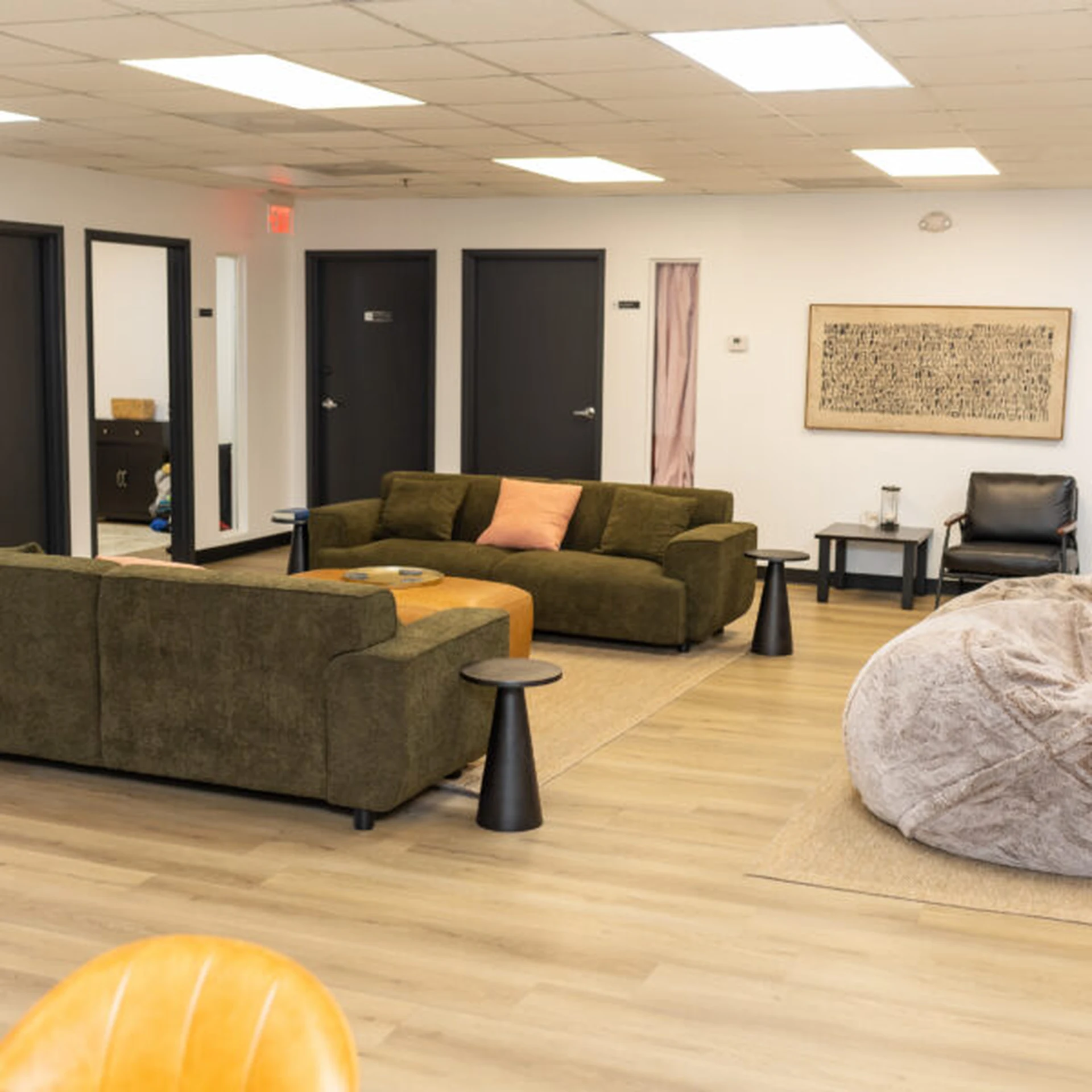
Mesa, Arizona
Monument Recovery sits in the East Valley of metro Phoenix, serving clients across residential, partial hospitalization, and intensive outpatient programs.



Thorough documentation was never the question. Proving it against every payor's criteria was the work.
Monument's clinicians wrote detailed notes. Each one carried a DAP narrative, a mental status exam, clinical rationale, and all six ASAM dimensions. That thoroughness is exactly why the team could speak to what every client needed. It also meant a single progress note could take 25 to 30 minutes of a clinician's day.
My therapists were speaking to everything in the dimensions. That's the standard we hold. It just took 25 to 30 minutes a note.
The harder part sat downstream. Payors apply their own numeric thresholds by level of care, a craving scale at one value for PHP and another for RTC, documented PAWS or withdrawal symptoms, specific treatment history. Strong clinical writing does not automatically speak in those terms, and Monument had no way to confirm a chart cleared them before it left the building.
Care managers want the nuts and bolts, exactly what's bringing the client into treatment, in the language they score against.
Circle Health runs on both sides of the documentation.
Capturing the note, and proving it meets medical necessity before it reaches a payor.
Charting that lifts the burden off clinicians
Monument's existing forms stayed exactly as they were, added as templates, not rebuilt. A clinician records the session, or dictates a few minutes of narrative, and Circle Health drafts a structured note that checks against payor standards before it's finalized.
A compliance review on every chart
Review assistants run automatically, validating the ASAM six dimensions for SUD and LOCUS for mental health. The intake narrative auto-populates the relevant dimensions; any flagged gap, such as a missing craving scale or withdrawal symptoms on Dimension 1 or 3, can be corrected and re-saved to recalibrate.
Assessment capacity beyond licensed staff
Because the review names exactly what each assessment is missing, trained behavioral health technicians now complete level-of-care and biopsychosocial assessments. Bradley signs off on each and turns flagged gaps into coaching. The work scales with the census instead of bottlenecking on licensed clinicians.
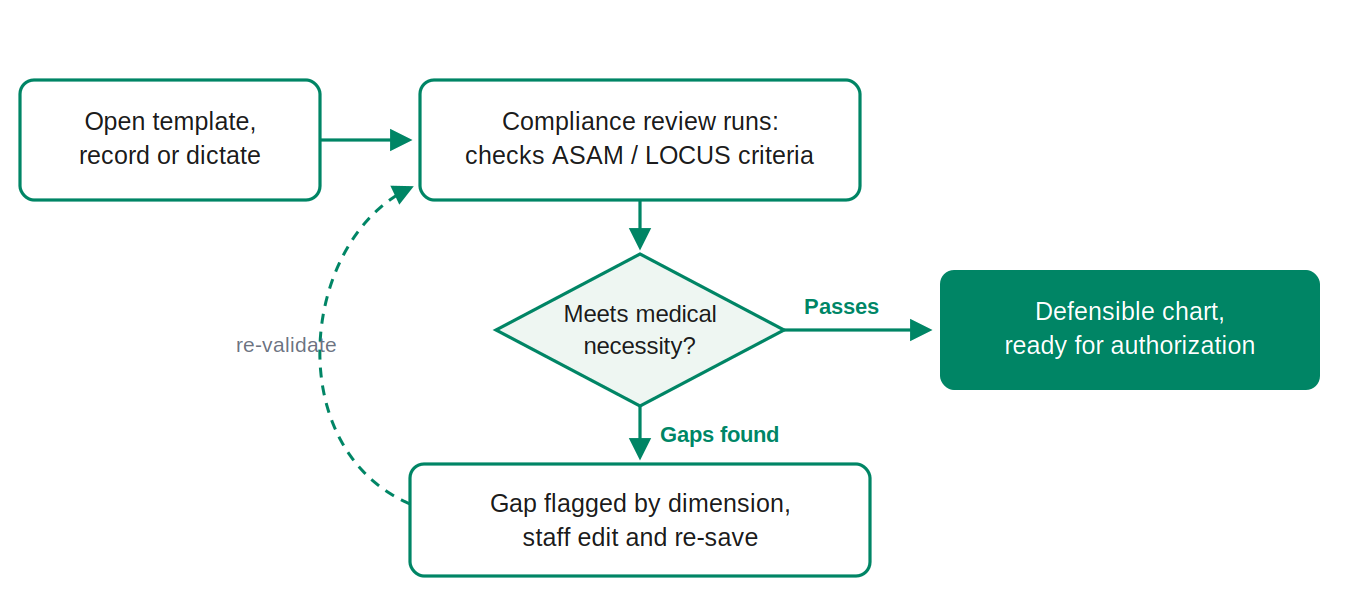
The review flags any gap in the ASAM or LOCUS dimensions, a craving scale, or withdrawal symptoms on Dimension 1 or 3, for example, so staff corrects it before the chart reaches a payor.
- Step 01
Capture
Clinician opens their existing template, then records or dictates the session. Circle drafts a structured note in the team's voice.
- Step 02
Review
Every chart is auto-validated against ASAM's six dimensions for SUD and LOCUS for mental health, across RTC, PHP, and IOP.
- Step 03
Defend
If the chart passes, Monument has concrete grounds for the authorization. If a dimension is thin, the gap is named, edited, re-saved, and re-validated.

“You can't argue with Circle's validated record. It either meets medical necessity or it doesn't.”
Authorizations Monument can stand behind.
Defensible authorization requests
When a chart passes review, Monument has concrete grounds to defend the authorization across RTC, PHP, IOP5, IOP3, and virtual IOP. Bradley reports increased approved authorizations and improved length of stay, clearest for mental health clients, with outcome data collection underway.
As long as it passes the Circle's Shield Check, we have concrete evidence to stand on.
Medical necessity payors can't contest
Peer reviews with Monument's medical director are now anchored in a validated record rather than solely on clinical judgment. With the criteria met in the chart, the clinical justification holds up under review. The only lever payors retain is a client's financial cap or benefit limit, not the clinical case.
Documentation time cut by two-thirds
Charts that took 25–30 minutes now take 5–10. When a clinician dictates, the spoken input runs about 3.5 minutes, and Circle drafts and validates the rest. Documentation burnout dropped with it.
I record into Circle for three and a half minutes, and it automatically generates the chart. It's a blessing.
Onboarding time cut in half
Getting Monument's forms and workflows into Circle Health took little time, even while three new clinicians joined. That's because Circle acts as a natural training tool running 24/7/365. And Circle support matches the stakes of daily clinical use. When Bradley needs a fix fast, he gets one.
I've called Steven at 6 pm. Steven and his team of engineers at Circle have always been great.



Two layers, one shift in the work.
Circle Health works at two points. The charting layer captures documentation correctly at the point of creation, so notes meet payor standards before they reach the EMR. The compliance layer validates every chart against medical necessity, catching anything that still needs attention. Together, they shift the work. UR and compliance teams using Circle return up to 80% of their time to training, coaching, and policy rather than manual review.
For Bradley, who came up through clinical supervision and still coaches his team daily, that is the point. Monument is building for scale, a five-year plan to expand into new states and add program types, including mental health RTC. Because ASAM and LOCUS criteria are universal, today's compliance checks should carry into new markets without major rework.
Next on his list is the data layer: treatment-plan compliance, length of stay, AMA rates, and outcome measures in dashboards he can use to coach clinicians and report to leadership.
Circle has been such a huge part of our clinical program. Without it, we'd be in scrambling mode.