Table of Contents
- Why prior authorization got harder for providers
- What we see across utilization review teams
- What AI prior authorization does well for providers
- Where AI prior authorization stops
- How AI prior authorization differs by care setting
- How to evaluate an AI prior authorization tool
- How Circle Health handles prior authorization
- FAQs
AI prior authorization software helps providers prepare requests in the format payers require. It reviews clinical records, checks them against payer criteria, assembles the packet, and tracks deadlines. Staff and clinicians still review each case and decide what to submit.
Most articles talk about payers using AI to review requests. This guide focuses on the provider side, showing how AI prior authorization helps hospitals, home health and hospice agencies, behavioral health programs, and RCM teams. It also covers the technology's limits and what to ask before buying.
Why prior authorization got harder for providers
Payers now review requests faster with more automation and cover more services. But providers still prepare most requests manually.
The workload is heavy. The AMA's 2025 Prior Authorization Physician Survey found that the average doctor handles 40 prior authorizations each week, taking up 13 hours of physician and staff time. 32% said requests are often or always denied, and 6 out of 10 worry that AI could increase denial rates.
Denials are common in every major market. In the first year of public reporting, insurers denied 12% of standard requests in Medicare Advantage, 14% in Medicaid managed care, and 18% in ACA Marketplace plans, according to KFF's analysis of 2025 insurer prior authorization metrics. Most of the work is still manual. The 2025 CAQH Index found that only 40% of medical prior authorizations are fully electronic, up from 31% two years ago.
Averages don’t tell the whole story. Medicare Advantage insurers denied 65% of prior authorization requests for long-term care hospital stays and 54% for inpatient rehab, according to OIG findings summarized by KFF. These denials delayed post-acute care by 5 to 6 days on average, often leaving patients waiting in hospital beds.
Three changes raise the stakes in 2026 and 2027:
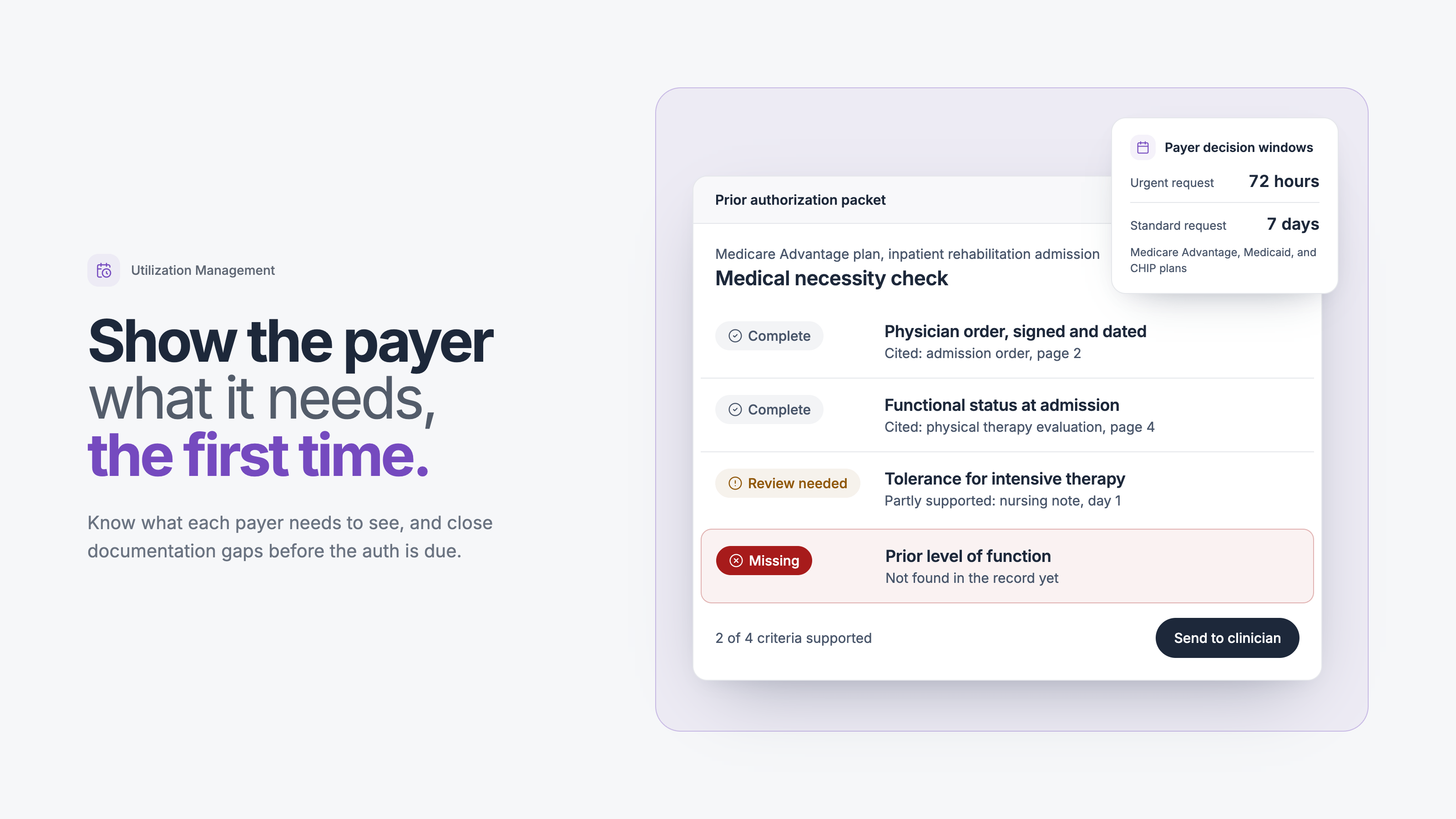
- Shorter decision windows. Under the CMS Interoperability and Prior Authorization Final Rule (CMS-0057-F), Medicare Advantage, Medicaid, and CHIP plans must decide standard requests within 7 calendar days and urgent ones within 72 hours, starting January 2026. Faster decisions mean there’s less time to fix a weak packet after it’s sent.
- Specific denial reasons. The same rule requires payers to state why they denied a request. Each denial now tells you what that payer wanted to see.
- AI on the payer side, now in traditional Medicare too. CMS's WISeR model brings technology-assisted prior authorization to selected services in traditional Medicare in six states (Arizona, New Jersey, Ohio, Oklahoma, Texas, and Washington), running 2026 through 2031.
Payer-facing electronic prior authorization APIs are coming in January 2027, and about 60 insurers have promised to simplify prior authorization around the same time. Electronic submission will speed up the process, but it won’t decide if the request meets the payer’s criteria. That responsibility still belongs to the provider.
Most denials are winnable. Most are never challenged.
In 2024, Medicare Advantage insurers denied 4.1 million prior authorization requests. KFF found that only 11.5% of those denials were appealed, and 80.7% of appeals were fully or partly overturned. So about 3.6 million denials went unchallenged in one year.
The federal government has noticed this gap too. A 2022 HHS Office of Inspector General report found that 13% of sampled Medicare Advantage prior authorization denials actually met Medicare coverage rules. KFF also notes that high overturn rates may mean the first request didn’t have the needed documentation.
Peer-to-peer results also vary widely by provider. Among the teams we work with, win rates range from about a third to 90%, depending on the payer, the program, and the chart details. The process is the same, but the results differ widely. That’s why it’s important to track peer-to-peer win rates by payer rather than guess.
What we see across utilization review teams
Public data shows how big the problem is. Our work with hospitals, post-acute and behavioral health providers, and RCM teams shows where the time and money really go. Six patterns come up again and again:
- Timeframes are tight and vary by setting. A procedure or imaging approval might cover an entire episode, but inpatient, post-acute, and behavioral health stays are often approved for just a few days at a time. One admission can require several re-reviews. Some payers give 3 days, then ask for a clinical update on day 4.
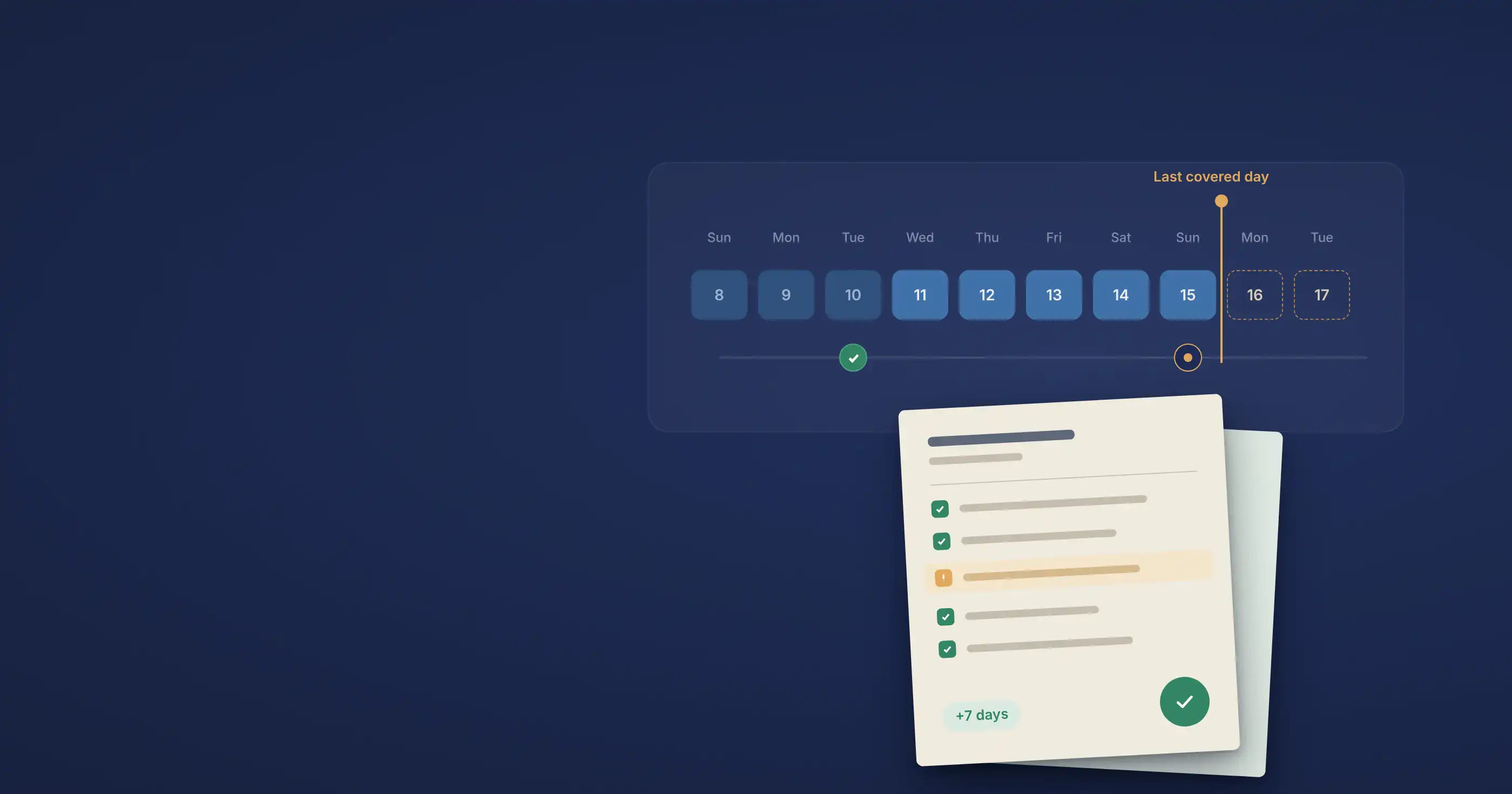
- The last covered day is critical. Many teams set their own deadline a day or two before the payer’s. If a submission is late, it doesn’t get a clinical review. Instead, it gets an administrative denial.
- Each payer has different requirements. Teams often handle four channels in the same week: fax, portal, live phone review, and voicemail. Some state Medicaid forms are 10 pages long, and some payer portals ask dozens of questions just for the first request.
- Pending authorizations can signal staffing issues. In our experience, having 5% to 10% of units pending authorization is normal. If it’s above 10%, the team often isn’t following up with payers quickly enough.
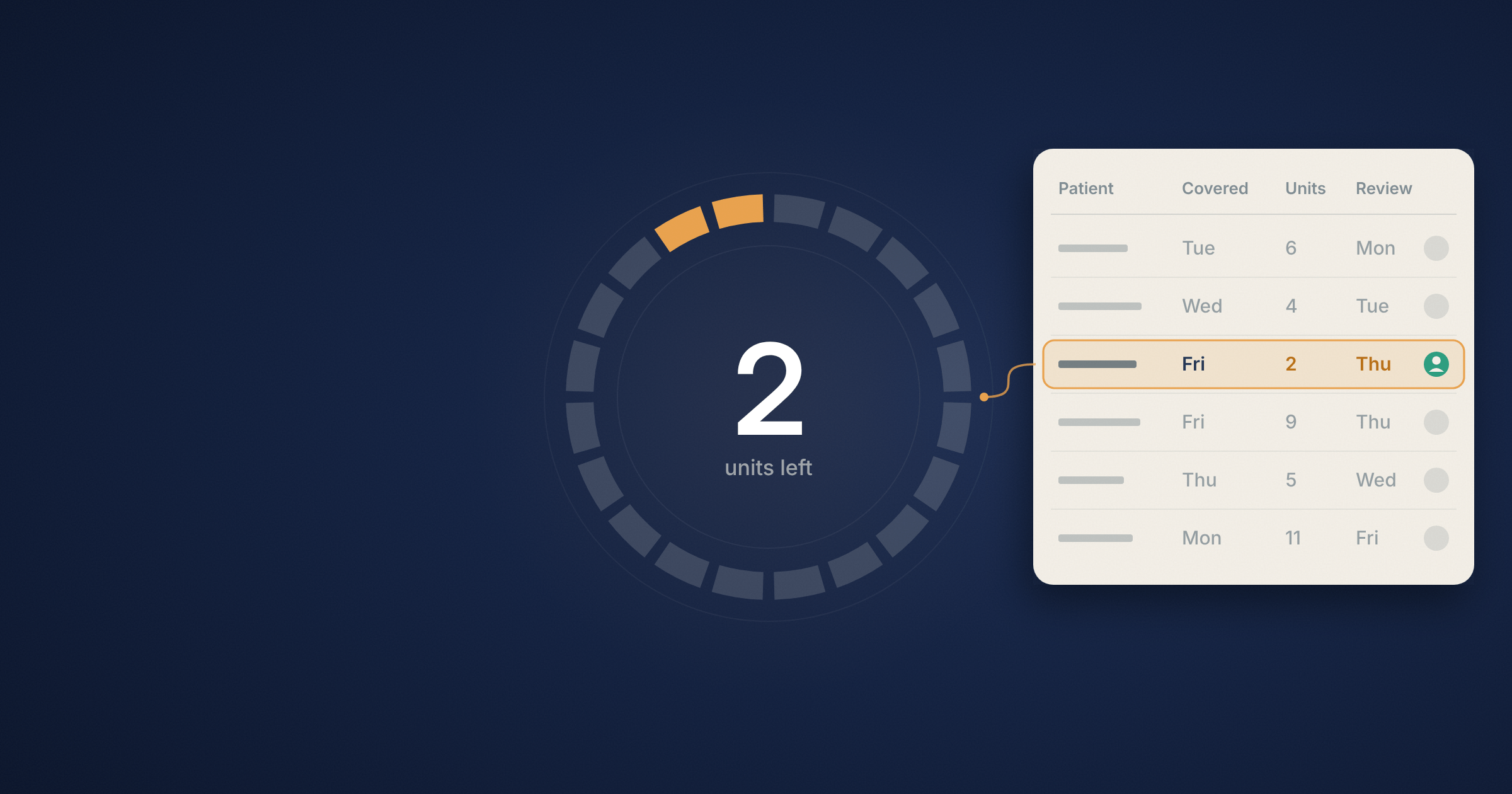
- Unused days don't roll over. When a patient moves to a lower level of care, any remaining authorized days or units at the higher level are usually lost.
- It’s hard to track outcomes. Most teams use spreadsheets or EMR notes to track authorizations, and few can easily report which authorizations went to peer-to-peer, which were denied, and which were won on appeal.
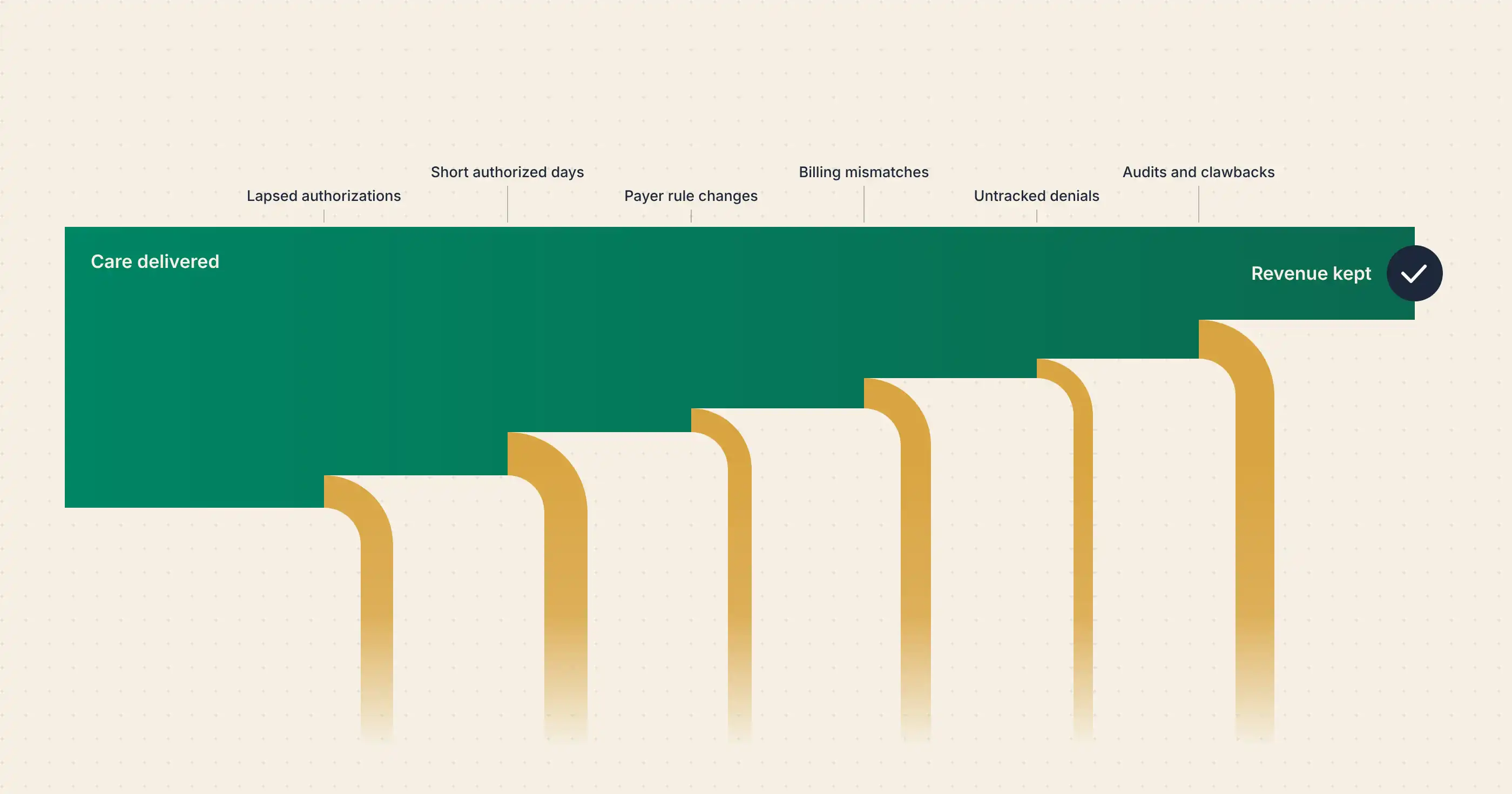
Where the money goes depends on the setting. In some hospital programs, initial approvals are almost automatic, but losses happen later. Denied days, stays that become administrative, and claim denials can rise even when authorization numbers look good. In many specialty programs, the first request is the main challenge. Initial requests are denied for the wrong level of care or missing documentation, and a single state authorization form can take nearly an hour to finish. Most operators need help both getting the first approval and keeping the stay authorized.
None of these issues appear in denial-rate statistics, but all of them affect whether care gets paid.
What AI prior authorization does well for providers
The best way to use AI prior authorization is for preparation. It helps make sure the evidence is correct before the request goes out. This is where it changes daily work.
| Task | By hand today | With AI prior authorization |
| Finding the criteria | Staff look up each payer's policy, form, and criteria set (InterQual, MCG, plan medical policy, ASAM, LOCUS) | The payer's requirements are applied to the case automatically |
| Checking the record | Someone reads the chart and hopes nothing is missing | The record is checked against the criteria before submission, with gaps flagged |
| Building the packet | Notes, assessments, and orders are pulled and pasted into the payer's form | A packet is assembled with each criterion tied to cited evidence in the chart |
| Tracking windows | Spreadsheets and calendar reminders for reviews and reauthorizations | Authorized units are matched to the live census, and the next deadline is surfaced |
| Concurrent review calls | Reviewers prepare from memory and scattered notes | A call script lists what this payer will ask and where the answers are |
| Appeals | Letters are written from scratch after a denial | Appeal letters are drafted with cited evidence and the payer's stated denial reason |
| Learning from payers | Patterns live in one person's head | Approval rates, turnaround times, and at-risk revenue are tracked by payer |
The main point is that the software handles the reading and matching. This lets your team focus on judgment calls and talking with payers.
Where AI prior authorization stops
AI prior authorization helps you build a strong case more quickly, but it can’t turn a weak case into a strong one. Keep these five points in mind:
- It can’t add care that wasn’t documented. If the record doesn’t show medical necessity, a good tool will flag the gap so a clinician can fix it. It should never fill in missing information with generated text.
- It doesn’t make clinical decisions. Clinicians and physicians still decide the level of care, treatment plans, and what gets signed.
- It doesn’t control the payer’s decision. A complete, well-supported request improves your chances, but the payer still makes the final call.
- Payer rules change over time. Plans update medical policies, forms, and criteria throughout the year. If your team can’t update the tool, it will be outdated within months.
- Not all payers are electronic yet. Many commercial plans still use portals, phone, and fax. The 2027 API deadline only applies to Medicare Advantage, Medicaid, CHIP, and federal marketplace plans, not every payer you work with.
Be cautious with claims of "fully automated" prior authorization. On the provider side, it’s best to have a person review every request before sending it.
How AI prior authorization differs by care setting
The basic process is similar everywhere, but the criteria, timing, and reasons for request failures are different. A tool made for one setting often misses the rules for another.
| Setting | Where requests tend to break | What the tool needs to know |
| Hospitals and health systems | Inpatient vs. observation status, payer reviews of the admission, and short initial approvals on psychiatric units that need a clinical update within days | The two-midnight rule, InterQual or MCG, CMS Conditions of Participation, each plan's medical policy |
| Home health | Pre-claim review and documentation that supports homebound status and need | OASIS and plan-of-care requirements, Review Choice Demonstration rules where they apply |
| Hospice | Fewer front-end authorizations, but heavy record review later | Benefit periods, eligibility documentation, the same evidence discipline applied before review |
| Behavioral health | Re-reviews every 5 to 10 days at higher levels of care, late submissions that trigger administrative denials, and step-downs that forfeit unused units | ASAM Criteria for substance use, LOCUS and CALOCUS-CASII for mental health, each payer's review schedule |
| ABA | Reauthorizations tied to progress data and supervision hours | Assessment and treatment codes, supervisor and technician roles, caregiver involvement |
| RCM companies and billing partners | Different rules for every client and every payer | Per-client, per-payer rule sets that the team can edit |
If you manage more than one setting or serve clients who do, check if the tool keeps separate rules for each. A single generic rule set won’t work for most cases.
How you get paid affects what the payer checks and where authorization can fail. Most operators use several payment models at the same time, often with the same payer.
Payment model | What the payer is checking | Where authorization breaks | What to track |
| Fee-for-service | Medical necessity for each procedure, test, or service | The billed code doesn't match what was authorized | Authorization number tied to each billed code |
| Per diem and case rates | Whether each additional day at this level of care is justified | Late concurrent reviews, denied days, and days that slip into administrative status | Days authorized vs. used, and the last covered day |
| Hourly and unit-based care | Hours or units delivered per authorization period | Units run out before reauthorization, or go unused and expire | Units remaining per period and the next reauthorization date |
| Value-based and risk contracts | Appropriate use across a population, not just one request | Utilization management shifts to the provider, and approval history affects future requirements | Approval rates by payer and service, which some insurers use for gold-card exemptions |
| Public programs and grants | State, county, or program rules that differ from commercial plans | Program-specific forms, service caps, and documentation rules | Rules by funder, with caps and reporting dates |
A single admission can involve two or three payment models at once. The tool you pick should know which model applies to each payer contract and track the right unit, whether that’s codes, days, hours, or dollars.
How to evaluate an AI prior authorization tool
Ask vendors these seven questions. The answers will help you tell the difference between tools that prepare strong, defensible requests and those that just speed up paperwork.
Question to ask | Why it matters | A strong answer |
| Whose criteria does it apply to, and which versions? | Payers use different criteria sets and update them often | Named criteria sets, per-payer policies, and a clear update process |
| Can our team change the rules without a support ticket? | Payer expectations change faster than vendor release cycles | Your staff edit rules in plain language and see the change right away |
| Does every criterion link to evidence in the chart? | Reviewers and payers need to see why the request meets criteria | Each point in the packet cites the note, assessment, or order behind it |
| Who approves a request before it goes out? | Accountability stays with your clinicians and staff | Nothing is submitted or written to the EMR without staff review |
| Does it work with our EMR? | Re-keying data adds errors and kills adoption | It reads the systems you already run, with no rip and replace |
| What happens after a denial? | The denial reason is the most useful data you get from a payer | Appeals drafted with cited evidence, and denial patterns tracked by payer |
| How is patient data protected? | Prior auth packets are full of protected health information | HIPAA compliance, a signed BAA, and no training on identifiable patient data |
Then ask to see the reporting. When we talk to utilization management and revenue cycle leaders about the numbers they want most, their lists are almost always the same:
- Days requested vs. days approved vs. days used, by payer and level of care
- Authorization denial rate, tracked separately from claim denials
- Peer-to-peer rate and peer-to-peer win rate
- Turnaround from request to decision
- Authorizations past the payer's own deadline with no decision
- Share of units still pending authorization, watched as a trend
If a tool can’t show these numbers by payer, your team will end up rebuilding them in spreadsheets.
How Circle Health handles prior authorization
Circle Health is a payer relationship system for healthcare operators. The EMR handles the patient record, and the RCM system manages transactions. Circle manages the relationship with each payer, starting with what each payer needs to see before approving a request.
Circle's Utilization Management workflow for prior authorization follows these steps:
- The workflow uses tools like InterQual, MCG, plan medical policy, ASAM, LOCUS, and CALOCUS-CASII to apply each payer's criteria, forms, and deadlines.
- Teams regularly review the census for medical necessity to find and fix gaps before deadlines.
- The workflow prepares prior authorization packets with cited evidence from the patient's chart.
- The system provides scripts for concurrent review calls and drafts appeal letters using the payer's stated reasons.
- The workflow tracks approval rates, turnaround times, and at-risk revenue by payer. It covers fee-for-service, per diem and case rates, hourly and unit-based care, value-based contracts, and public programs.
Payer Intelligence helps support the process. If a denial is overturned, the successful approach is saved as a rule for future requests to that payer.
Clinicians make the decisions, and staff reviews each entry before it is added to the EMR. Circle works with any EMR or healthcare system, including Epic and Meditech.
These results mean more care gets authorized. Teams using Circle's Utilization Management workflow have seen 112% more care authorized per review. Circle has also helped reduce authorization denials by 76% within two months.
FAQs
What is AI prior authorization?
AI prior authorization uses software to prepare requests by checking the clinical record against each payer's criteria, assembling the packet, and tracking deadlines. Circle Health does this within its Utilization Management workflow, linking each criterion to cited evidence in the chart so staff can review a complete request before it is sent to the payer.
Can AI submit prior authorizations without staff review?
It should not. Payers still make the decisions, and the provider is still responsible for what is submitted. At Circle Health, clinicians make the clinical decisions and staff review every request before it is sent. Nothing is entered into the EMR without that review. The software handles the reading, matching, and drafting, but people make the final call.
Does AI prior authorization replace utilization review staff?
No. It eliminates manual searching, copying, and form-filling, so reviewers can handle more cases and focus on payer conversations. Circle Health provides utilization review teams with prepared packets, call scripts for concurrent reviews, and draft appeal letters, while the team maintains ownership of every case.
How often are prior authorization denials overturned?
Denials are often overturned when providers appeal. In Medicare Advantage, 80.7% of appealed prior authorization denials were fully or partially overturned in 2024, but only 11.5% of denials were appealed. Circle Health helps teams close this gap by drafting appeal letters with cited evidence from the chart and tracking peer-to-peer and appeal outcomes by payer.
How does the CMS prior authorization rule affect providers?
Since January 2026, Medicare Advantage, Medicaid, and CHIP plans must decide standard requests within 7 calendar days and urgent ones within 72 hours, and must provide specific denial reasons. Faster decisions mean there is less time to fix a request after it is sent. Circle Health checks the record against payer criteria before submission and uses denial reasons to create rules for future requests.
Which criteria does AI prior authorization use?
The criteria depend on the payer and the care setting. Common criteria include InterQual, MCG, plan medical policy, ASAM for substance use, and LOCUS or CALOCUS-CASII for mental health. Circle Health applies each payer's criteria, forms, and deadlines across hospitals, home health, hospice, behavioral health, ABA, and RCM teams. Your staff can also update the rules themselves.
Is AI prior authorization HIPAA compliant?
It can be, but you should check with each vendor. Ask for HIPAA compliance, a signed Business Associate Agreement, and a clear policy on patient data and model training. Circle Health is HIPAA compliant, signs BAAs, stores data in the US, and does not train models on identifiable patient data.
Does Circle Health work with our EMR?
Yes. Circle integrates with any EMR or healthcare system. It works alongside your existing systems, reading the record to prepare prior authorization requests, so you do not need to replace anything.